



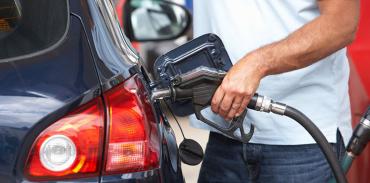
Just in time for the Labor Day weekend, gas prices have reached their highest average of the year due to Hurricane Harvey’s impact on Houston and the western part of the Gulf--and Florida drivers will pay higher prices at the pumps.
On Thursday night, AAA released a study showing the national average stood at $2.45 per gallon, the highest so far this year. Gas prices are also on the rise in Florida, moving up to $2.41 per gallon on Thursday night. So far this year, the peak of gas prices in the Sunshine State occurred in April when prices hit an average of $2.47 per gallon. But AAA warned on Thursday night that “motorists should expect gas prices to rise another 5-10 cents in the near-term due to a combination refinery and pipeline shut downs, tightened access to supply levels in the Gulf, and anticipated high gasoline demand surrounding Labor Day weekend.”
Since last Friday, when Harvey made landfall, gas prices have gone up 10 cents a gallon in the Sunshine State. West Palm Beach has the most expensive gas in Florida with prices coming in at $2.50 a gallon followed by Miami at $2.45 per gallon and Ft. Lauderdale at $2.44 per gallon. Jacksonville has the least expensive gas in Florida at $2.36 per gallon followed by Tampa and Daytona Beach where gas averaged $2.38 per gallon on Thursday.
Jose Carrasco, a spokesman for AAA and the Auto Club Group, weighed in on the higher gas prices Thursday night.
“Consumers should expect to see the highest Labor Day prices at the pump since 2014,” Carrasco said. “We expect the national average to top $2.50/gallon. On the positive side, AAA does not expect Gulf refineries to be offline for months, as early reports indicate minimal to no significant damage to Corpus Christi and Houston refineries. Once refineries are back to full operation, we should expect to see gas prices fall towards the end of September."
AAA noted that ten Gulf Coast refineries were still shut down while others were still recovering and reducing at reduced rates. AAA also warned that refineries in Louisiana could be shut down as Harvey heads east.
Carrasco noted that the Colonial Pipeline, which starts in Houston and supplies the East Coast, has suspended its gasoline, diesel and jet fuel pipelines though he said there are other sources adding to the supply.
“The shut downs do not indicate a shortage of gasoline supplies in the Gulf Coast region or across the country,” said Carrasco. “Overall stocks in the Gulf are above average levels and will be available to drivers once power is restored and area roads are cleared.
“Northeast refiners are stepping in and barging supplies to the U.S. Southeast, the Caribbean, Mexico and South America to offset the lack of supply from Gulf Coast refineries and pipelines shut down due to Harvey,” Carrasco added.
