



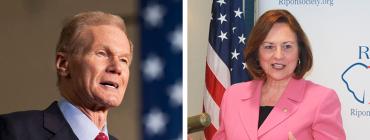
This week, U.S. Sen. Bill Nelson, D-Fla., teamed up with U.S. Sen. Deb Fischer, R-Neb., to bring out the “Spoofing Prevention Act of 2016" to crack down on the use of fraudulent IDs in text messaged and IP-enabled calls.
When they unveiled their proposal on Monday, both Nelson and Fischer insisted their bill would crack down on fraud and protect seniors.
“Modern technology makes our lives easier, but it also creates new challenges,” Fischer said. “Loopholes in our laws have allowed predators to falsify who they are and gain sensitive financial information from millions of Americans, particularly veterans and the elderly. That’s why I’m proud to team up with Senator Nelson to introduce bipartisan legislation that would close these loopholes and protect our citizens from fraud and abuse.”
“Far too many Americans are still being ripped off by scammers using spoofing technology,” Nelson said. “This bill should help turn the tide and better enable consumers and law enforcement to stay ahead of the fraudsters.”
Nelson insisted the proposal would expand on the Truth in Caller ID Act which he backed and was signed into law in 2010, bringing in new technologies under the law.
On Monday, Nelson took to the Senate floor to weigh in on their bill.
“We all know how our senior citizens have been the victims of spoofing,” Nelson said. “Well, that's happening to a lot of our fellow citizens, no matter what the age is, because fraudulent and abusive phone scams are plaguing thousands of Americans each year. These deceitful practices are causing very serious harm to victims by fake messages coming across often that cause the receiver to respond with some kind of financial transaction or the giving up of a credit card number. The Commerce Committee and the Aging Committee have explored the impact of these scans, and by one account consumers continue to lose millions of dollars each year to fraudulent phone scams, many of which originate in other countries.
“The impact of these scams are very real to the consumers who suffer,” Nelson continued. “For example, one poor soul took his life [last] year after spending thousands in a vain attempt to collect on his winnings in what he thought was a Jamaican lottery – winnings that were nonexistent because it was all a scam. Well, a lot of us think that we have trained ourselves to ignore phone calls and text messages from numbers that pop up that we don't recognize, but this is also where the sophisticated scammer enters. Because now scammers impersonate government institutions' numbers, and they promote fraudulent lottery schemes, and they tailor their calls to individuals in order to coerce victims in a paying large sums of money just like the victim that I mentioned earlier this year. And so they use spoofing technology to manipulate the caller ID information, and they trick consumers into believing that the calls are local or they come from trusted institutions.
“Technology is passing us by,” Nelson insisted. “As the technologies evolve, the law directed the Federal Communications Commission to prepare a report to Congress outlining additional tools that are going to be needed for different kinds of spoofing practices because of new technologies.
The FCC a few years ago provided its recommendations to Congress on how to update the law to keep pace with technology and the use of it by criminals. And so Senator Fischer and I have filed a bill today that responds to the [FCC] reports, recommendations and their requests, and it builds on the 2010 act on phone scams to keep up with the new kind of spoofing, because they are now much more sophisticated. And we need to make sure that there are the consumer protections and the tools for law enforcement to keep up, and that's why this legislation that we filed today is important.
“This senator is going to press the Federal Communications Commission to continue to use its full authority under the Truth in Caller ID Act to stop these scams, including a consideration of technical solutions like the call authentication to protect consumers,” Nelson concluded.
Reach Kevin Derby at kderby@sunshinestatenews.com or follow him on Twitter: @KevinDerbySSN
