



U.S. Rep. Ander Crenshaw, R-Fla., is teaming up with members of both parties and some old allies as he looks to expand the “Achieving a Better Life Experience" (ABLE) Act to help disable Americans save.
Crenshaw, the chairman of the House Financial Services and General Government Appropriations Subcommittee, has led the charge for the bill -- which creates tax-free savings accounts for disabled Americans for qualified expenses -- since 2006. The U.S. House overwhelmingly passed the bill back in December 2014 which was followed by a U.S. Senate passage later in the month. Florida's two senators -- Democrat Bill Nelson and Republican Marco Rubio -- voted to support the bill. President Barack Obama signed the bill in December 2014.
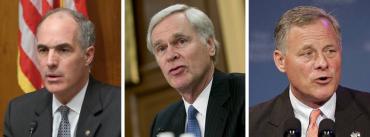
On Thursday, Crenshaw teamed with U.S. Sens. Richard Burr, R-NC, and Bob Casey, D-Penn., and U.S. Reps. Cathy McMorris Rodgers, R-Wash., Pete Sessions, R-Texas, and Chris Van Hollen, D-Mary., to propose expanding the current law with the “ABLE to Work Act” and other proposals.
Under the “ABLE to Work Act,” disabled individuals who work and their families would be able to save more in ABLE accounts, up to $11,770, the current federal definition of poverty, and be eligible for the Savers Credit. The senators and representatives also proposed allowing rollovers between ABLE accounts and 529 college savings plans and expanding the age limit to open ABLE accounts from 26 to 46.
"When the ABLE Act became law-of-the-land on December 19, 2014, a brighter future opened to millions of Americans living with disabilities,” Crenshaw said. “Today, people with disabilities can use tax-free ABLE accounts to plan for future expenses without risking the loss of critical federal benefits. Now is the time to build on that historic achievement with additional, common-sense tax code revisions that promote self-sufficiency for an even greater number of individuals with disabilities. That's independence worth fighting for: No one who is willing to work, save, and responsibly plan for their future should be held back by the U.S. tax code. Period."
“The ability to support yourself through work is an essential element of the American dream,” said Burr. “The ABLE to Work Act gives disabled Americans and their families better options to plan for the future. Many individuals with disabilities are able to work, but our current one-size-fits all system punishes those who do by making them ineligible for benefits. Work is about more than financial support; it’s about participating in society and building a sense of purpose. It is wrong to exclude the most vulnerable members of our community from the benefits of work. I am also proud to join with my colleagues to introduce legislation to improve the ABLE Act by allowing rollovers from 529 college savings plans as well as allowing individuals who become disabled after turning 26 to open and save in an ABLE account.”
“This legislation will strengthen the ABLE Act and I’m pleased that we were able to assemble a bipartisan coalition to introduce these measures,” Casey, who was one of the chief backers of the proposal back in 2014, said. “The belief that undergirds the ABLE Act is that those with disabilities have a lot of ability. These measures will help families who have a child with a disability to put that child on a more secure financial footing.”
Almost 35 states, including Florida, have set up ABLE programs since Obama signed the law.
Reach Kevin Derby at kderby@sunshinestatenews.com or follow him on Twitter: @KevinDerbySSN
